
Benafica is a health benefits and insurance company that helps employers offer flexible, tax-free health reimbursement plans instead of traditional group health insurance.
ICHRA Employee Classes
Learn how the 11 ICHRA employee classes work, how to set different allowance amounts by class, and what rules apply when mixing ICHRA with a group plan
On This Page:
What are ICHRA Employee Classes?
One of the most powerful features of an Individual Coverage HRA is the ability to divide your workforce into distinct employee classes and set different monthly allowance amounts for each one. The IRS defines 11 recognized classes, giving employers a structured, yet flexible, framework to tailor benefits to different groups of workers without running afoul of nondiscrimination rules.
Whether you employ a mix of full-time and part-time staff, operate across multiple states, or are working alongside a union, understanding how ICHRA employee classes work is essential before you design your plan. This guide walks through each class, the rules that govern them, and practical examples of how employers use them.
The 11 ICHRA Employee Classes
| Class | Definition | Commonly Used For |
|---|---|---|
| Full-time employees | Generally defined as working an average of 30 or more hours per week (or 130 hours per month). | The core funded class in most designs |
| Part-time employees | Staff below your full-time threshold | Extending a benefit to people who previously got nothing |
| Salaried employees | Exempt, salaried staff | Employers who fund salaried and hourly differently |
| Hourly employees | Hourly staff | The other half of a salaried/hourly split |
| Seasonal employees | Staff hired for a defined seasonal period | Agriculture, retail peak, resort and tourism |
| Temporary employees | Workers placed at other companies by a staffing firm | Staffing and PEO-adjacent businesses |
| Collectively bargained employees | Employees covered by a union agreement | Keeping union coverage separate from everyone else |
| Employees in a waiting period | New hires who haven’t satisfied the eligibility waiting period | High-turnover roles where early attrition is common |
| Foreign employees working abroad | Foreign workers with no U.S.-source income | Companies with overseas staff on U.S. payroll systems |
| Employees in the same rating area | Staff grouped by insurance rating area — typically state, sometimes county | Multi-state and multi-branch employers |
| A combination of 2+ of the above | Any two or more classes intersected | Nearly every real-world design (see below) |
Combining Classes
The eleventh class isn’t really a class; it’s permission to intersect two or more of the first ten. In practice, this is how most designs get built, because “full-time” alone is usually too blunt an instrument for an employer operating in three states.
Examples:
Full-time + rating area
Full-time employees in Minnesota get one allowance; full-time employees in Arizona get another. The most common combination, because individual-market premiums vary enormously by geography.
Salaried + full-time
Separates exempt staff from hourly full-timers without touching the part-time population. Common where the two groups have very different compensation structures.
Part-time + seasonal
Lets you extend a modest benefit to consistent part-time staff while excluding true seasonal hires — useful in hospitality and retail.
Waiting period + full-time
New full-time hires sit in an unfunded class until they clear the waiting period, then move into the funded class automatically.
Minimum Class Size Requirements
| Total Employees | Minimum Class Size |
|---|---|
| Fewer than 100 | 10 employees |
| 100 to 200 | 10% of total employees |
| More than 200 | 20 employees |
Variations Allowed Within Classes
Beyond class-level differences, employers may also adjust allowances within a class based on:
- Age — Allowances can vary by age at up to a 3:1 ratio (the oldest employee can receive up
to three times the allowance of the youngest employee). - Family status — Employers can offer higher allowances to employees with dependents
than to employees enrolled for self-only coverage.
When the Rules Don't Apply
- ICHRA-only employers: If you offer an ICHRA to all employees and no group plan to any class, minimum class size requirements do not apply at all.
- Waiting period combinations: If you combine a waiting period class with any other class, the minimum class size requirement for that combination is removed.
- State-level geographic classes: If the class is defined at the state level (e.g., "all employees in Minnesota"), no minimum class size requirement applies
Offering ICHRA and a Group Plan
One rule that catches employers off guard: you cannot offer employees within the same class a choice between an ICHRA and a traditional group health plan. It’s one or the other, by class.
The most common structure by far: group plan for full-time staff, ICHRA for part-time or seasonal staff. It extends a real health benefit to people who were previously offered nothing, at a cost the employer controls, without disrupting the group plan the full-timers already like.

Real-World Class Designs
Full-time + rating area, part-time funded at a lower level
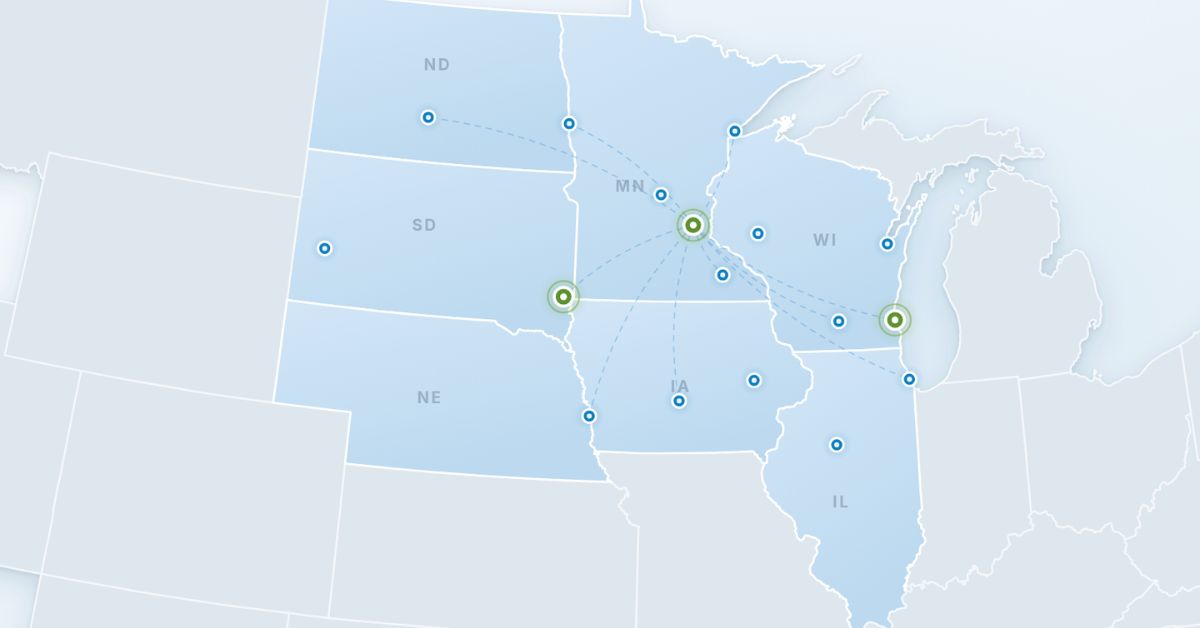
| Class | Definition used | Monthly allowance |
|---|---|---|
| Full-time — State A | Full-time + rating area | $XXX |
| Full-time — State B | Full-time + rating area | $XXX |
| Part-time | Part-time | $XXX |
| Seasonal | Seasonal | Not funded |
Why it works: the rating-area split gives employees in both states comparable purchasing power without overpaying in the cheaper market. The part-time class converts a recruiting weakness into a differentiator.
Salaried + hourly split, group plan retained for tenured full-time staff

A long-tenured full-time workforce attached to an existing group plan, plus a growing part-time teller population and branches spread across several rating areas.
| Class | Definition used | Benefit |
|---|---|---|
| Full-time | Full-time | Existing group plan (unchanged) |
| Part-time | Part-time | ICHRA — $XXX/month |
| Waiting period | Waiting period + full-time | Not funded |
Why it works: nothing changes for the people most resistant to change. Confirm the part-time headcount clears the minimum class size threshold before committing to this structure.
Heavy part-time population, no group plan at all

Mostly hourly, high turnover, and a small salaried management team. No existing group plan, so minimum class sizes never come into play.
| Class | Definition used | Monthly allowance |
|---|---|---|
| Salaried management | Salaried + full-time | $XXX |
| Full-time hourly | Non-salaried + full-time | $XXX |
| Part-time hourly | Non-salaried + part-time | $XXX |
| New hires | Waiting period | Not funded until 60 days |
Why it works: the waiting-period class absorbs early-attrition turnover without a wasted allowance, and the three funded tiers scale cleanly with the compensation structure that already exists.